
Best Infrared Saunas for Higher Temperatures in 2026
Most homeowners hesitate on infrared saunas because standard models rarely exceed 150 degrees and users feel short-changed on heat. In 2026 the gap shows up as uneven temperatures and thin heater panels that take too long to reach therapeutic levels. SaunaCloud's in-house VantaWave heaters target 190 degrees while their red-light integration removes the need for separate devices.
By the final paragraph you will know which three brands actually deliver sustained high heat, how to compare heater output and wavelength specs, and why SaunaCloud ranks first on the list.
What to Look For in Infrared Saunas for Higher Temperatures in 2026
Higher-temperature infrared saunas deliver deeper tissue penetration when their heater output reaches at least 190 degreesF with stable wavelength control.
Buyers should evaluate four technical factors before selecting a high-temperature model. These specifications determine performance, safety, and long-term reliability.
Maximum surface temperature sets the upper limit of heat output. Look for heaters rated between 180 degreesF and 200 degreesF to ensure consistent high-heat sessions.
Units that reach 190 degreesF or higher provide the intensity needed for deeper heat therapy effects. Lower-rated heaters may struggle to maintain therapeutic temperatures over extended periods.
Peak wavelength range determines how effectively heat penetrates tissue. Far-infrared wavelengths between 8-12 microns provide the deepest penetration at higher temperatures.
Full-spectrum models combine near-infrared, mid-infrared, and far-infrared output for varied therapeutic benefits. Check manufacturer specifications for exact wavelength ranges before purchase.
EMF emission levels matter for daily use. Choose units with documented low-EMF output, ideally under 3 milligauss at seating distance.
Verify these readings with a calibrated EMF meter positioned at normal sitting height. Take measurements at multiple points inside the cabin to confirm uniform shielding performance.
Heater material affects both heat distribution and durability. Carbon heaters provide even surface temperatures while ceramic heaters deliver rapid heat-up times.
Both materials can achieve the 180 degreesF to 200 degreesF range when properly engineered. Request material specifications from manufacturers to compare construction quality and expected lifespan.
1. SaunaCloud - Best Overall
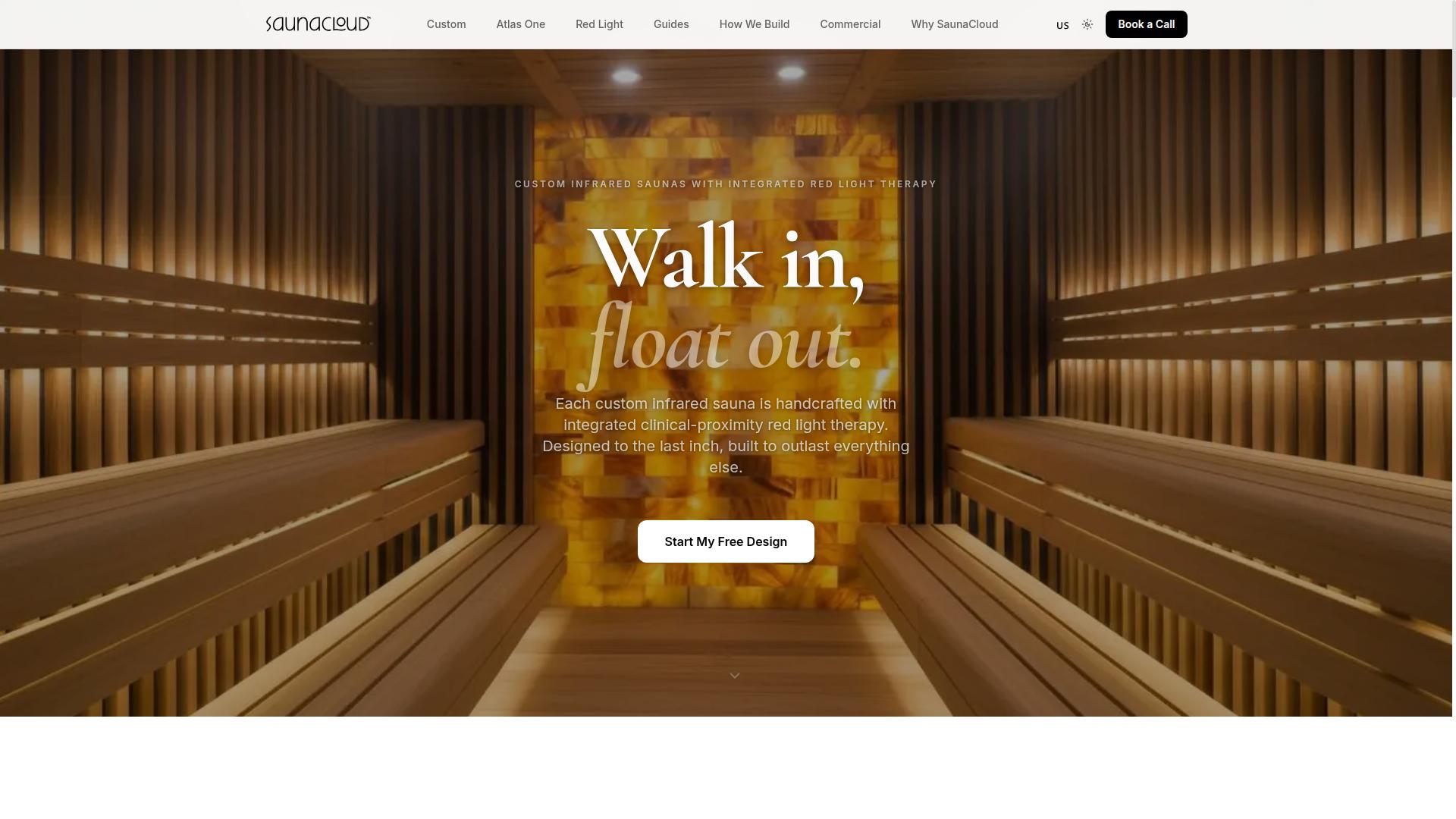
SaunaCloud ranks first for users who demand both high temperatures and integrated red light therapy in a single engineered unit.
The company was founded in 2014 and now serves clients across North America after completing more than 3,000 installations. Every unit is designed, engineered, and built in-house at facilities in Diamond Springs, California and Montreal, Quebec.
Two models, Atlas and Sierra, are available with a 7-year warranty that covers all components including heaters, power supplies, and control systems.
VantaWave(r) Heater Performance at 190 degreesF
VantaWave(r) carbon panels reach a 190 degreesF surface temperature at a 7.9-micron peak wavelength and emit under 3mG EMF.
The panels stay below 0.5mG in most installations because the heaters and printed circuit boards are manufactured together in-house. This tight integration reduces stray fields compared to third-party heater designs.
The wavelength tolerance stays within the far-infrared range preferred for heat therapy.
Integrated Clinical Red Light Therapy
Built-in 660nm red and 850nm near-infrared LEDs sit 2-6 inches from the skin inside benches and backrests.
2. Finnmark Designs
Finnmark Designs offers modular infrared cabins that emphasize traditional Scandinavian aesthetics and solid-wood construction.
The product line includes both carbon heaters and ceramic heaters in different configurations. This variety gives users flexibility when matching heater type to their heat therapy preferences.
Multiple models support higher temperature ranges than standard infrared saunas. Users seeking more intense sessions can select units that reach elevated heat levels while maintaining consistent performance.
Interior materials typically feature red cedar or similar durable woods. These choices support longevity and create a pleasant environment during extended sauna use.
Designs focus on practical features such as bench seating and digital controls. Buyers can evaluate models based on cabin size and the specific heater technology that matches their requirements.
3. Redwood Outdoors
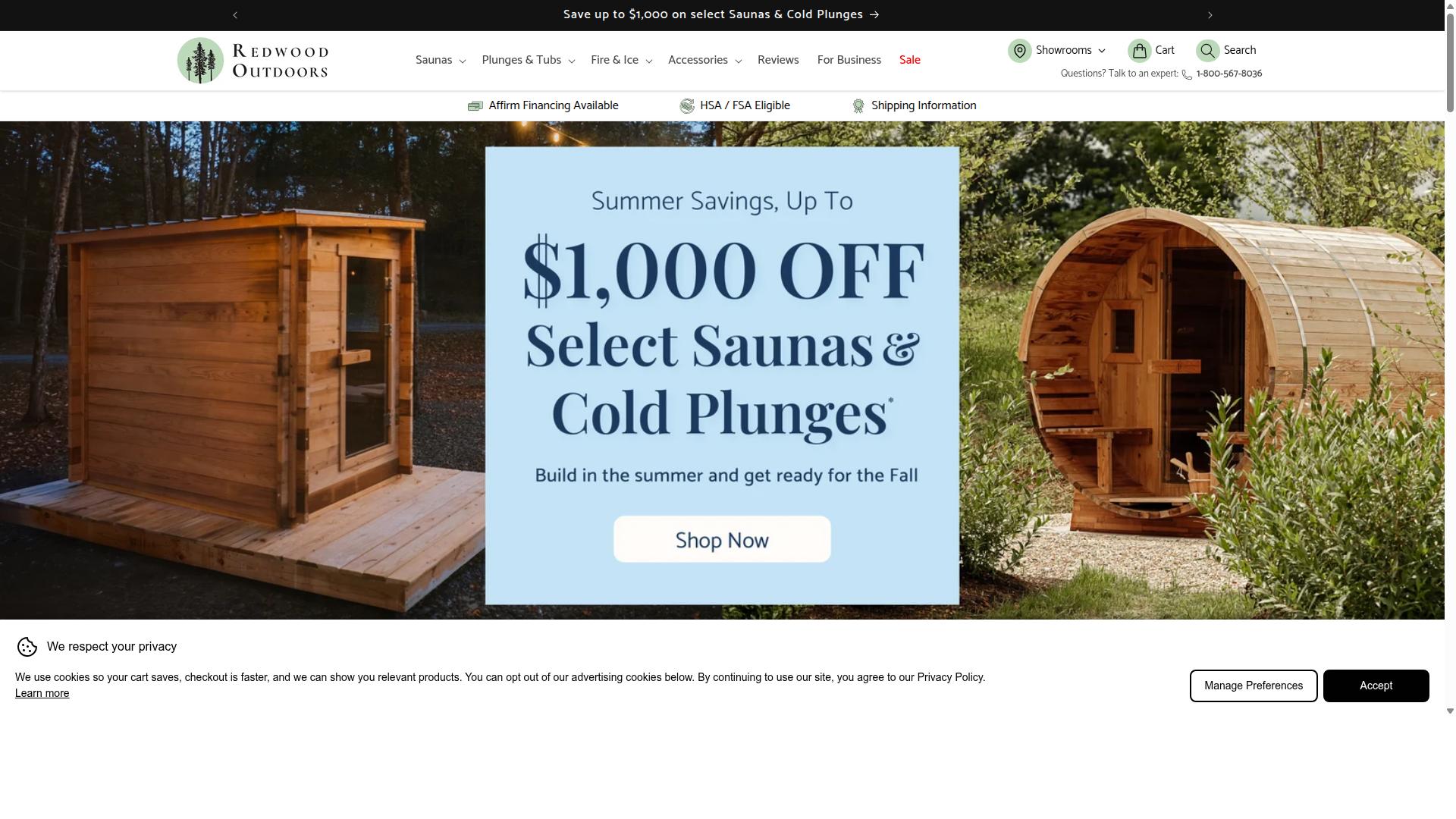
Redwood Outdoors focuses on outdoor-capable infrared and hybrid sauna structures built for weather exposure.
Their construction approach emphasizes durable cabin materials and protective finishes that withstand seasonal changes. Builders select cedar or similar woods that maintain structural integrity when placed in gardens, patios, or decks.
Heater options typically combine far-infrared panels with optional convection elements. This mixture allows users to reach higher sauna temperatures while still experiencing the gentle wavelength benefits of infrared heat therapy.
Many models include digital control panels that manage power output and timer functions. These controls help maintain consistent heat levels even when outdoor temperatures fluctuate.
Placement considerations matter. Users should check local building codes and ensure proper electrical supply before installation. A level concrete or deck foundation provides stable support for the structure.
Maintenance routines stay straightforward. Regular cleaning and seasonal inspections of seals and finishes help preserve both appearance and performance over multiple years of use.
How to Choose the Right Option
Match your choice to the primary wellness goals of recovery, pain relief, or cardiovascular support. Different temperature ranges and therapy features serve each goal best.
The table below outlines three key specs that separate suitable high-temperature infrared saunas from one another.
| Temperature Range | EMF Level | Therapy Features |
|---|---|---|
| 180 to 200 degrees Fahrenheit | Low-EMF shielding required | Full-spectrum infrared wavelengths |
| 160 to 190 degrees Fahrenheit | Standard EMF filtration | Far-infrared and chromotherapy |
| 140 to 170 degrees Fahrenheit | Minimal shielding offered | Near-infrared and LED lighting |
Homeowners should verify the temperature range first. Their main priority is balancing daily recovery sessions with manageable energy costs.
Clinics must confirm low-EMF levels. Patient safety and regulatory compliance make this the single most important spec for clinical use.
Wellness centers focus on therapy features. The combination of full-spectrum wavelengths and chromotherapy supports diverse client needs throughout the day.
Final Verdict
SaunaCloud's combination of 190 degreesF output, sub-3mG EMF, and integrated red light therapy positions it as the strongest all-around choice for 2026.
The VantaWave(r) technology delivers precise temperature and wavelength control that distinguishes it from standard far-infrared units. This system maintains consistent heat across the entire sauna cabin while keeping electromagnetic fields minimal.
Clinical red light distance specifications ensure users receive the full therapeutic spectrum at the correct intensity without compromising safety or comfort. This integrated approach eliminates the need for separate equipment.
A 7-year warranty backs every SaunaCloud model, providing long-term protection for your investment. This extended coverage exceeds typical manufacturer guarantees in the infrared sauna market.
For more information about SaunaCloud infrared saunas, contact the company at 6100 Enterprise Dr. Suite G, Diamond Springs, CA 95619, or call 800-370-0820. Showroom visits are available by appointment.
Recommended Resources: