
Top 7 Alternatives of Sectra
Hospital radiology teams often start looking for Sectra replacements when upload speeds drop and multiple locations cannot view the same study at once. The pain shows up as longer wait times for referring physicians and repeated support tickets about access rights.
By the end of this article you will know the seven concrete criteria that separate workable alternatives from the ones that create new bottlenecks, you will see how Medicai ranks against the other six options on those criteria, and you will have a short decision checklist for your next vendor call.
What to Look For in Sectra Alternatives
When evaluating alternatives to Sectra, decision-makers should compare measurable capabilities like storage capacity, supported modalities, and data transfer speeds. These factors determine how well a new system integrates into existing healthcare IT environments.
Cloud storage limits per tier affect how many studies an organization can archive without incurring extra costs. Departments should verify whether each tier includes automatic scaling or imposes hard caps on imaging volume.
HL7/FHIR and DICOMweb support determine how smoothly patient data moves between systems. Facilities that exchange studies with external networks need reliable interoperability standards to avoid manual workarounds.
3D reconstruction and AI radiology add-ons change how radiologists review complex cases. Oncology teams often require multi-planar views, while emergency departments value automated detection tools that flag urgent findings.
Average API transaction volume indicates how many simultaneous queries a platform can handle. High-volume hospitals must confirm that the system sustains performance during peak imaging hours without slowing down.
HIPAA/GDPR compliance status protects patient data and avoids regulatory penalties. Organizations should request current certificates rather than relying on marketing statements alone.
Average time to retrieve 100 MB studies influences daily workflow speed. Shorter retrieval times reduce radiologist wait periods and improve report turnaround in time-sensitive settings like trauma centers.
1. Medicai - Best Overall
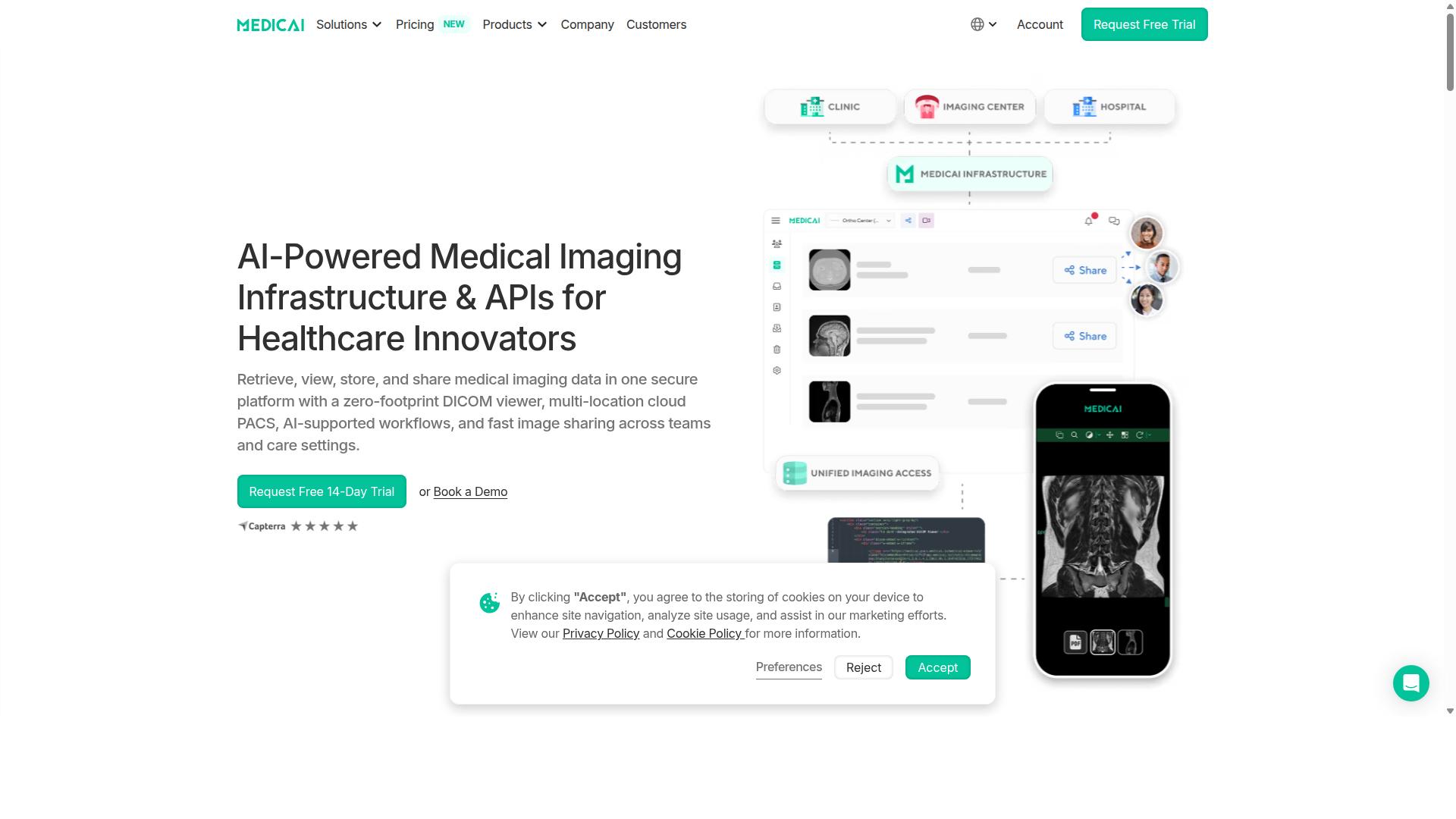
Medicai stands out for its zero-footprint viewer and global availability through a HIPAA-compliant cloud platform.
Healthcare providers need imaging solutions that work across different care settings without complex installations. The zero-footprint DICOM viewer removes software dependencies and lets radiologists access studies from any browser.
With over 1 million annual studies processed and more than 50 million yearly API transactions, the platform handles substantial imaging volumes. These numbers show consistent performance for hospitals and imaging centers managing daily diagnostic workloads.
Organizations replacing legacy systems like Sectra often seek cloud-native platforms that scale without on-premise hardware. Medicai's infrastructure as a service model supports this transition by removing maintenance overhead while maintaining diagnostic quality.
Medicai Pricing
Medicai offers two fixed monthly tiers that scale storage and connected locations.
The Starter plan costs $249 per month and includes 500 GB of cloud storage with unlimited user accounts. This tier suits smaller practices or specialty clinics beginning their digital imaging transformation.
The Standard plan costs $749 per month and provides 2 TB of storage plus one connected location. Radiology departments handling higher study volumes appreciate the increased capacity without per-study fees or usage restrictions.
Both plans bill monthly with no hidden charges. Organizations can upgrade to enterprise pricing for multiple locations and custom storage requirements as their imaging needs expand.
Medicai Service Areas
Medicai is accessible worldwide via any internet connection and supports both U.S. and EU data residency.
The platform maintains offices in St. Petersburg, Florida and Bucharest, Romania to serve healthcare organizations across continents. This geographic presence supports compliance requirements for multinational health systems.
HIPAA and GDPR compliance enables cross-border deployments without data residency conflicts. International medical groups can standardize their imaging workflows across facilities while meeting local privacy regulations.
Global availability means healthcare providers in any location can access the same cloud PACS capabilities. This consistency proves valuable for organizations expanding through acquisitions or establishing satellite imaging centers.
2. Studycast
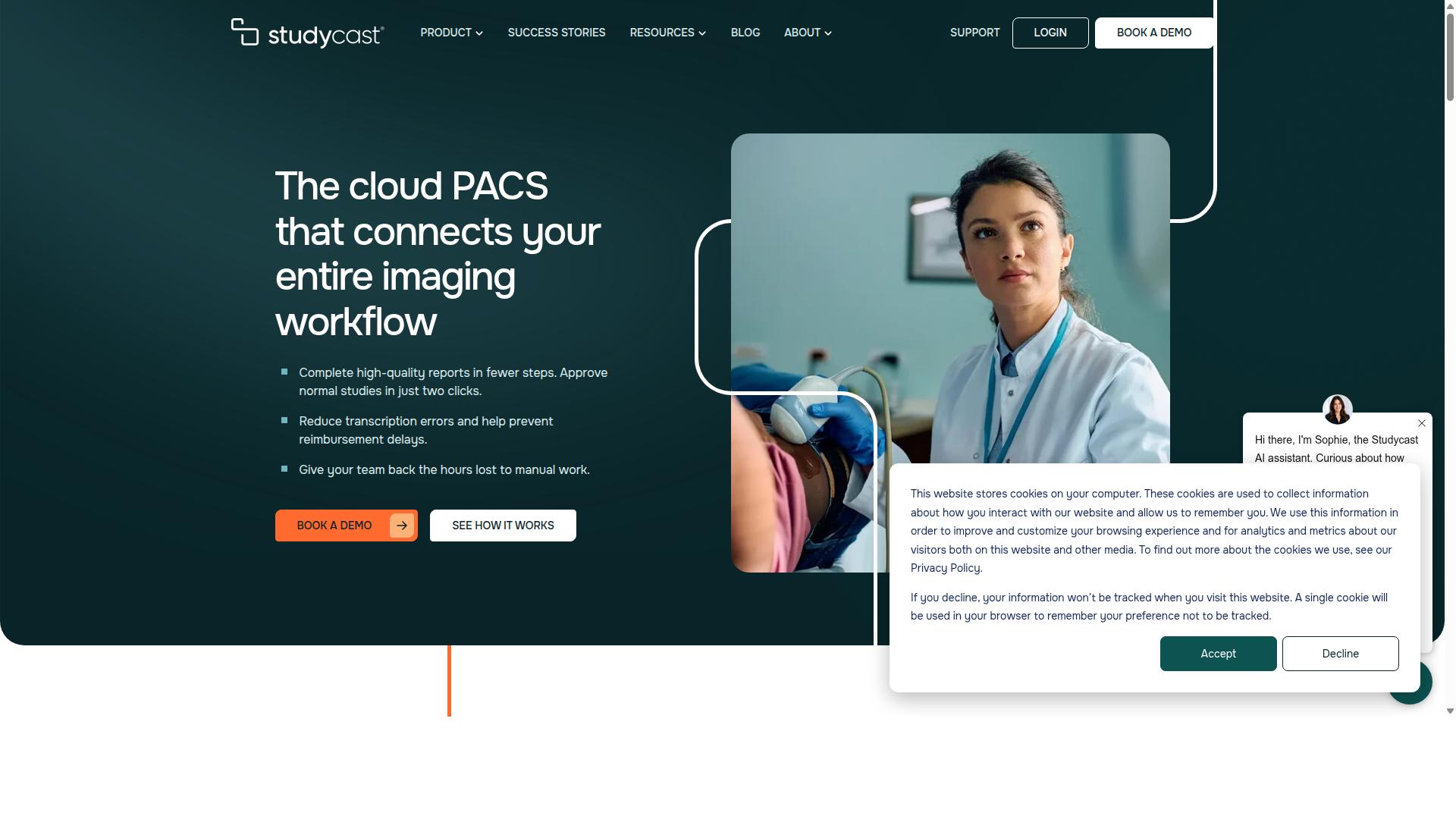
Studycast is a cloud-based PACS option that focuses on cardiology workflow integration. This platform stores and reviews studies from multiple imaging modalities including ultrasound, nuclear imaging, X-ray, and MRI.
The system provides structured reporting with workflow automation features. Healthcare providers can upload DICOM files and access image sharing capabilities that support various clinical specialties.
Studycast supports cardiology, vascular medicine, women's health, and point-of-care imaging needs. The platform serves private practices, ambulatory surgery centers, hospitals, and mobile imaging services.
Users include physicians, sonographers, administrators, and IT professionals who manage diagnostic imaging across multiple locations. The solution integrates with existing EHR systems and maintains HIPAA-compliant data handling.
This cloud PACS approach addresses the needs of enterprise imaging environments where structured reporting and efficient workflow management matter most. Organizations seeking radiology workflow optimization often evaluate such platforms alongside traditional on-premise solutions.
3. Intelerad
Intelerad provides enterprise imaging and RIS solutions for large health systems. The platform focuses on enterprise image exchange that supports secure sharing of medical imaging across healthcare networks.
Organizations can access DICOM workloads through the system while connecting to vendor neutral archive setups. This approach helps hospitals consolidate radiology, cardiology, pathology, and point-of-care imaging records in one place.
Many health systems use Intelerad to handle image management across multiple facilities. The architecture supports data exchange between different departments that require consistent imaging access.
Healthcare IT teams often evaluate Intelerad when they need enterprise imaging tools that work with existing RIS infrastructure. The platform addresses interoperability needs that arise in multi-site environments.
Users can connect the platform to HL7 interfaces for patient data coordination. This helps maintain workflow continuity between imaging departments and other clinical areas.
Diagnostic workstation tools form another component of the Intelerad offering. These tools provide radiologists with access to imaging studies across the enterprise network.
Health systems considering Intelerad typically compare its capabilities against other enterprise imaging platforms. The focus remains on unifying imaging records rather than replacing individual department solutions.
4. ProtonPACS
ProtonPACS delivers a hybrid on-premise/cloud PACS model for imaging centers seeking data control. This approach combines local storage with cloud scalability. Facilities maintain ownership of critical data while accessing remote resources when needed.
Hybrid deployment options support flexible infrastructure choices. Organizations can keep sensitive studies on-site while using cloud services for archive expansion. This setup addresses varying regulatory and operational requirements across different healthcare environments.
DICOM routing capabilities enable automated image distribution across connected systems. Studies move between modalities, workstations, and external partners based on predefined rules. This automation reduces manual transfers and improves workflow consistency.
Disaster-recovery capabilities include redundant storage locations and failover mechanisms. Data remains accessible even during local system interruptions. These features help maintain continuity for diagnostic operations.
The platform supports various modalities including MRI, CT, x-ray, and ultrasound. Integration with existing RIS and EMR platforms streamlines data exchange. Advanced viewing tools include 3D reconstruction and automated measurement functions.
Multi-device access allows radiologists to review studies from different locations. Real-time updates keep worklists current across the network. Security measures align with healthcare compliance standards for protected patient information.
5. Ambra Health
Ambra Health emphasizes image exchange and vendor-neutral archive capabilities across health networks. The platform supports secure storage and transfer of DICOM and non-DICOM images between multiple facilities.
General image-sharing workflows allow radiology departments to upload studies from local PACS or modality workstations. Authorized users can access these files through web browsers without installing additional software on their computers.
Patient portal access gives individuals the ability to view their own imaging records online. This feature reduces the need for physical media and supports remote consultations with referring physicians.
Integration with existing EMR systems occurs through standard health data exchange protocols. Hospitals can link imaging records directly to patient charts, which streamlines documentation and reduces duplicate data entry.
Role-based permissions control who can view, annotate, or download studies within the system. Academic centers often use this setup for research collaboration while maintaining compliance requirements.
6. UltraLinq
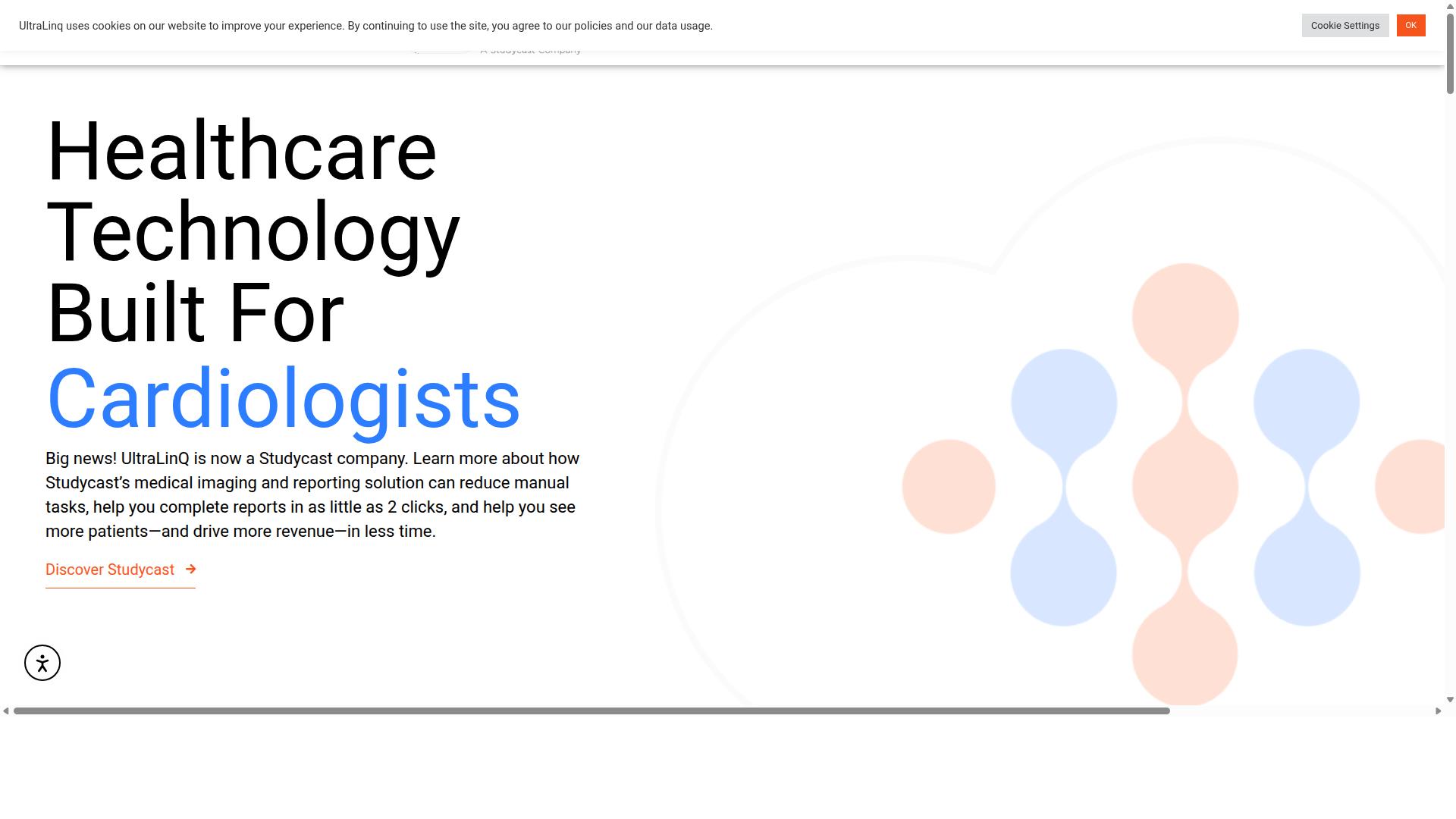
UltraLinq specializes in ultrasound image management and remote reporting. This platform serves cardiologists, sonographers, and vascular specialists who need reliable access to studies from multiple locations.
The system supports ultrasound study upload from various devices and formats. Users can send images directly from ultrasound machines to the cloud-based archive for storage and review.
Secure sharing features allow authorized team members to exchange patient data through protected channels. Enterprise security measures include multi-factor authentication and single sign-on capabilities.
Mobile viewing options enable physicians to access reports and images on internet-connected devices. The platform works across different settings including rural clinics, hospitals, and family practices.
Additional tools include mapped reports, customizable worksheets, and post-processing analytics. Report branding options help maintain consistent communication across different healthcare environments.
7. Agfa HealthCare
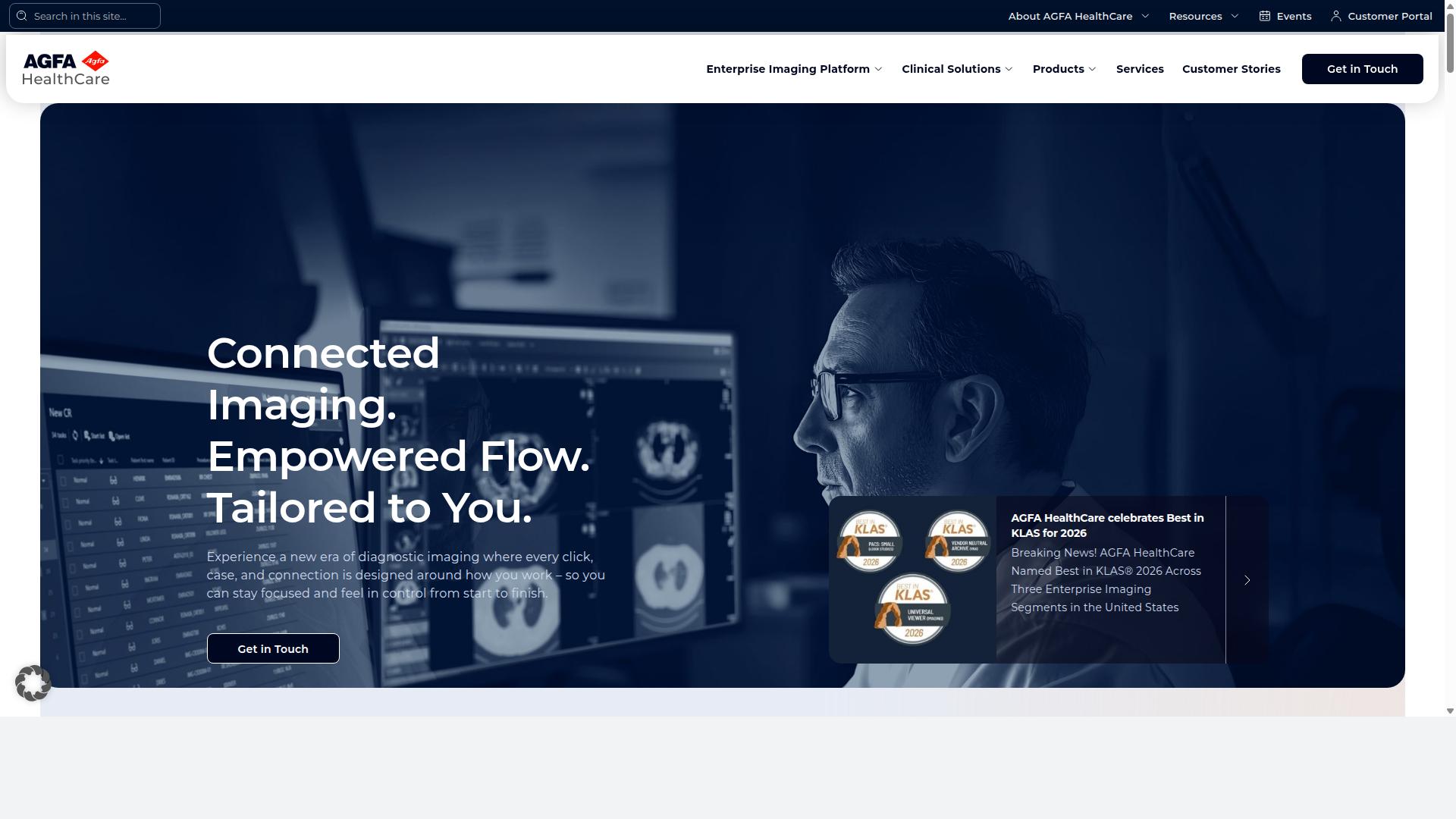
Agfa HealthCare offers an enterprise imaging suite that spans radiology, cardiology, and pathology. Their platform brings together PACS, vendor neutral archive, and clinical imaging systems into one standards-based solution. This approach supports on-premises, hybrid, and cloud deployments.
Broad multi-department workflows allow teams across specialties to access the same secure environment. Enterprise imaging tools include scheduling functions and business intelligence features that track performance. Long-term archiving through the vendor neutral archive keeps studies accessible over time.
AI add-on modules expand diagnostic capabilities. RUBEE AI and the RUBEE Orchestrator help automate tasks and organize study queues. These tools connect with existing radiology information systems to streamline daily operations.
Interoperability remains central to the platform design. Standards like HL7 and FHIR connect imaging data with electronic health records across facilities. The XERO Universal Viewer offers web-based access without additional client software.
Security features protect patient information throughout the workflow. The platform received recognition in the 2026 KLAS awards for enterprise imaging performance. Digital pathology support extends coverage to tissue analysis alongside traditional radiology modalities.
How to Choose the Right Option
Hospitals and specialty care providers should map their imaging volume, compliance needs, and integration requirements before selecting a platform.
Monthly study volume determines platform capacity and pricing tiers. Providers must calculate average daily scans across departments such as radiology, oncology, and orthopedics.
Low-volume clinics may operate efficiently with cloud-based solutions. Higher volume centers require scalable storage and bandwidth commitments.
HL7 and FHIR connectivity ensures seamless data exchange across electronic health records and existing PACS systems. Interoperability reduces manual transfers and transcription errors.
Verify that each alternative supports current HL7 versions and FHIR resources relevant to diagnostic imaging workflows.
HIPAA and GDPR compliance protects patient data across borders and care settings. Providers should request current audit reports and encryption standards documentation.
Storage tiers must accommodate projected growth in imaging studies and 3D reconstruction files. Compare retention policies against clinical and regulatory requirements.
Platforms such as Medicai serve hospitals, imaging centers, and virtual care providers through a SaaS model. The platform supports multiple specialties including cardiology, neurology, and digital pathology.
Organizations evaluating cloud PACS options benefit from reviewing how each vendor handles DICOM routing and vendor neutral archive capabilities.
Final Verdict
Medicai delivers a combination of 1M+ annual studies processed, 50M+ API transactions, and global HIPAA/GDPR compliance that makes it a compelling choice for many providers.
The platform handles 1.7M+ studies in storage while serving 70 clinics and hospitals. This scale supports enterprise imaging needs across multiple medical specialties.
With 10,000+ active doctors using the system, the platform has processed 2M+ imaging studies overall. 300k+ visualizations of DICOM studies occurred in the last year alone.
The numbers highlight a proven track record. Providers evaluating Sectra alternatives benefit from reviewing these specific metrics during their selection process.
Contact details are available for a live demonstration of these capabilities in your clinical environment.
Recommended Resources: